

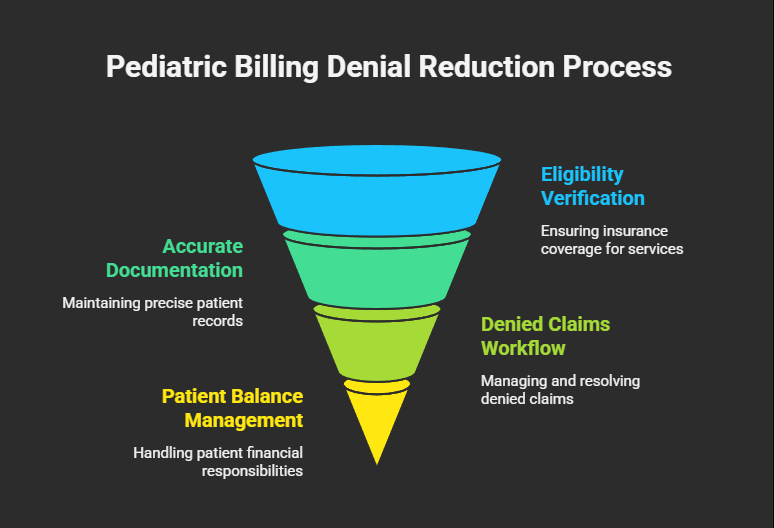
Medical billing Pinecrest FL practices rely on being both accurate and efficient, especially in pediatric settings where volume and variability are high. Managing billing without slowing down the front desk can be challenging, particularly when denials begin to affect revenue and workflow. Pro MD Medical Billing supports practices with structured processes that improve pediatric billing performance while maintaining speed. This blog explains how to reduce denials through better eligibility checks, accurate documentation, and a clear denied claims workflow.
Understanding the Core Challenges in Pediatric Billing
Pediatric billing presents unique challenges, given the nature of the patients and the variety of services provided. Unlike adult medical billing, pediatric billing involves frequent changes in patient eligibility, seasonal spikes in visits, and a higher volume of preventive care services. These factors can lead to increased denials if not managed carefully. Our goal is to address these challenges head-on by implementing proactive strategies.
The Importance of Eligibility Verification
Eligibility verification is the first step against denials. It ensures that the services provided are covered under the patient’s insurance plan. This step, although simple, is often overlooked or rushed, leading to avoidable denials. Here’s how we can enhance our eligibility verification process:
- Automate the Process: Utilize software that integrates with insurance databases to verify eligibility in real-time. This reduces manual entry errors and speeds up the process.
- Train Front Desk Staff: Ensure that our front desk team is well-trained in using eligibility tools and understands the importance of this step.
- Regular Updates: Keep track of changes in insurance policies and update our systems accordingly to avoid surprises.
Accurate Documentation: A Crucial Component
Accurate documentation is important in preventing denials. Errors in documentation can lead to claim rejections or delays. To maintain accuracy, consider the following practices:
- Standardized Forms: Use standardized forms and templates to ensure consistency in documentation.
- Regular Audits: Conduct regular audits of patient records to identify and rectify common documentation errors.
- Staff Training: Provide ongoing training to our medical staff on the importance of accurate documentation and how to achieve it.
Streamlining the Denied Claims Workflow
Despite our best efforts, denials are sometimes unavoidable. However, a streamlined denied claims workflow can turn these issues into improvements for improvement. Here’s how:
Efficient Tracking and Analysis
Tracking denied claims helps identify patterns and address the root causes of denials. Implement a system that allows us to:
- Track Denials in Real-Time: Use software that provides real-time updates on denied claims, allowing for quick action.
- Analyze Denial Trends: Regularly analyze denial trends to identify common issues and fix them early.
Effective Follow-Up Procedures
Once a claim is denied, timely follow-up is essential. Develop a follow-up procedure that includes:
- Prioritization of Claims: Prioritize denied claims based on the chances of approval and financial impact.
- Dedicated Denials Team: Consider having a dedicated team like ProMD Medical Billing or individuals responsible for handling denials and appeals.
- Clear Communication: Maintain clear communication with insurance companies to resolve issues quickly.
Managing Patient Balances Efficiently
Patient balances can also contribute to financial strain if not managed appropriately. Ensuring that patients are aware of their financial responsibilities and providing convenient payment options can improve collections. Here are some strategies:
Transparent Billing Practices
Transparency in billing helps build trust with our patients and encourages timely payments. Consider these practices:
- Clear Billing Statements: Provide clear and detailed billing statements to avoid confusion.
- Upfront Cost Estimates: Offer upfront cost estimates for procedures to help patients plan financially.
Flexible Payment Options
Offering flexible payment options can make it easier for patients to settle their balances. Consider implementing:
- Payment Plans: Offer payment plans for larger balances to ease the financial burden on families.
- Online Payment Portals: Provide an online portal for convenient and secure payments.
The Role of Technology in Pediatric Billing
Technology plays a crucial role in optimizing pediatric billing processes. From automating eligibility checks to managing denied claims, the right technology can improve efficiency. Here’s how technology can support our billing efforts:
- Integrated Systems: Use integrated systems that combine scheduling, billing, and patient records for seamless operations.
- Data Analytics: Leverage data analytics to gain insights into billing patterns and identify areas for improvement.
Choosing the Right Billing Partner
Partnering with a specialized billing service like ProMD Medical Billing can further enhance our billing efficiency. Their expertise in medical billing in Pinecrest FL ensures that our practice can focus on patient care while they handle the complexities of billing.
Reducing denials in pediatric billing without slowing down our front desk is achievable with the right strategies and tools. By focusing on eligibility verification, accurate documentation, and a streamlined denied claims workflow, we can enhance our practice’s efficiency and financial health. Partnering with experts like ProMD Medical Billing can further support our efforts, allowing us to concentrate on what we do best—providing exceptional care to our young patients. Contact us today for more information.
Frequently Asked Questions (FAQs)
Q: How can we reduce billing errors in our pediatric practice?
A: Reducing billing errors involves a combination of accurate documentation, comprehensive staff training, and utilizing technology to automate and verify processes.
Q: What should we do if a claim is denied?
A: Develop a systematic approach to track and address denied claims, prioritize them based on impact, and maintain open communication with insurance providers to resolve issues promptly.
Q: How can technology help in managing patient balances?
A: Technology can facilitate online payments, automate reminders for outstanding balances, and provide patients with easy access to their billing information.