
Healthcare organizations operate in an environment where even small billing errors can trigger audits, penalties, or payor takebacks. That’s why building a strong internal framework for RCM compliance is no longer optional—it’s essential. A well-structured healthcare compliance program helps protect revenue, reduce exposure to legal risk, and support long-term operational stability. At Pro MD Medical Billing, we work closely with providers to strengthen billing audit prevention strategies and create compliance-focused revenue cycle processes that stand up to payer and regulatory scrutiny.
Understanding the Importance of RCM Compliance
Revenue Cycle Management touches every financial interaction in a healthcare organization, from registration and coding to claim submission and payment posting. Without strong RCM compliance, even high-performing practices can face audit risk. A proactive healthcare compliance program ensures that billing workflows align with payer rules, documentation standards, and regulatory expectations.
When we help providers improve RCM compliance, the goals are clear:
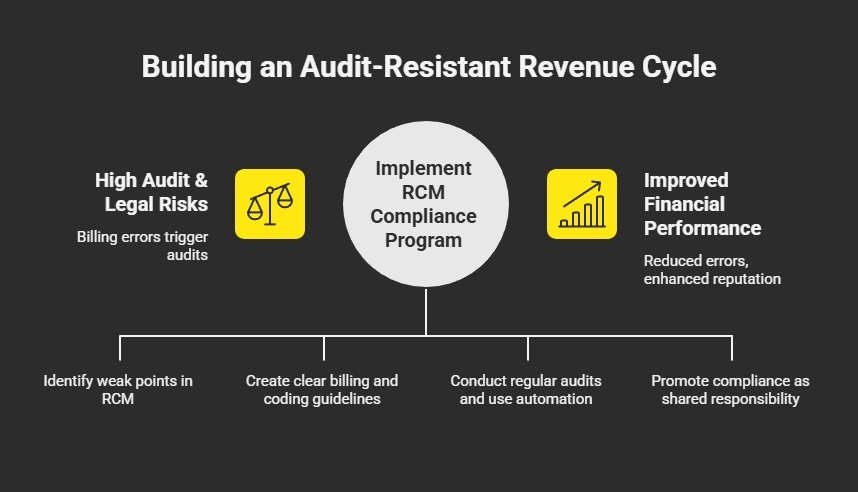
- Reducing the risk of billing audits: By ensuring accuracy in billing processes, healthcare providers can significantly reduce the chances of facing audits.
- Minimizing legal risks: A compliant RCM system helps prevent legal issues arising from inaccurate billing or non-compliance with healthcare regulations.
- Enhancing operational efficiency: Streamlined processes and clear guidelines lead to more efficient operations and better patient care.
Steps to Build an Effective RCM Compliance Program
1. Conduct a Comprehensive Risk Assessment
Every successful RCM compliance strategy starts with understanding risk. We recommend a structured risk assessment that identifies weak points across the revenue cycle.
This includes:
- Evaluate current procedures: Examine existing billing and documentation processes to identify vulnerabilities.
- Analyze past audits: Review previous audit findings to pinpoint recurring issues.
- Engage stakeholders: Involve key personnel from various departments to gain a holistic view of compliance risks.
At Pro MD Medical Billing, we use this step to prioritize compliance improvements that deliver the greatest audit protection.
2. Develop Clear Compliance Policies and Procedures
Once risks are identified, clear policies are critical. A strong healthcare compliance program depends on written standards that guide daily decision-making.
Effective policies typically cover:
- Billing and coding guidelines: Ensure that billing and coding practices are in line with industry standards and regulations.
- Documentation requirements: Define what constitutes adequate documentation for billing purposes.
- Regular training programs: Implement ongoing training sessions for staff to keep them updated on compliance requirements.
Well-documented procedures play a direct role in billing audit prevention by ensuring consistency across teams.
3. Implement an Effective Monitoring System
To ensure that compliance policies are being followed, it’s crucial to have an effective monitoring system in place. This can include:
- Regular audits: Conduct periodic internal audits to ensure adherence to compliance policies.
- Automated systems: Utilize technology to monitor billing processes and flag potential compliance issues.
- Feedback mechanisms: Establish channels for staff to report compliance concerns or suggest improvements.
Continuous monitoring strengthens RCM compliance and reduces the likelihood of payer takebacks or regulatory action.
4. Foster a Culture of Compliance
Long-term success depends on culture. A healthcare compliance program is most effective when compliance is viewed as a shared responsibility rather than a checklist.
We encourage organizations to focus on:
- Leadership commitment: Ensure that leadership is fully committed to compliance and sets a positive example for staff.
- Employee engagement: Encourage open communication and involve employees in compliance initiatives.
- Recognition and rewards: Acknowledge and reward staff who consistently adhere to compliance standards.
Benefits of a Robust RCM Compliance Program
When implemented correctly, a comprehensive RCM compliance framework delivers measurable value.
Key benefits include:
- Improved financial performance: By reducing billing errors and minimizing audits, organizations can experience better financial outcomes.
- Enhanced reputation: A commitment to compliance boosts the organization’s reputation among patients, payers, and regulatory bodies.
- Reduced legal liabilities: A compliant RCM system helps avoid costly legal battles and penalties.
Building an audit-resistant revenue cycle requires more than reactive fixes—it requires a deliberate, well-governed approach to RCM compliance. A strong healthcare compliance program protects against audits, minimizes legal risk, and supports financial sustainability across the organization. At Pro MD Medical Billing, we help providers design and maintain compliance-driven revenue cycle frameworks that prioritize accuracy, accountability, and billing audit prevention at every stage.
If you’re looking to strengthen your compliance posture and reduce audit exposure, contact our team to learn how we support healthcare organizations with audit-proof RCM strategies and long-term compliance solutions. Together, we can build a revenue cycle that protects both your practice and your bottom line.