

As we move through 2025, we’re seeing healthcare practices adapt rapidly to financial and operational pressures—and nowhere is this more evident than in how groups manage their revenue cycles. The revenue cycle management differences between small practices and large medical groups have become more pronounced than ever, shaping everything from workflow to technology adoption. At Pro MD Medical Billing, we work with both practice types, which gives us a clear view of how small practice RCM needs differ significantly from large group RCM, and how each can maximize efficiency and ROI with the right strategy.
Understanding Revenue Cycle Management (RCM)
Before digging into practice size differences, it helps to revisit what RCM truly involves. Revenue cycle management is the backbone of financial stability in healthcare—covering patient registration, insurance verification, claim submission, payment posting, denial management, and everything in between.
The Importance of Effective RCM
Strong RCM is essential because it directly affects cash flow, reimbursement timelines, and the practice’s ability to deliver care. This is why understanding revenue cycle management differences based on practice size isn’t optional—it’s strategic.
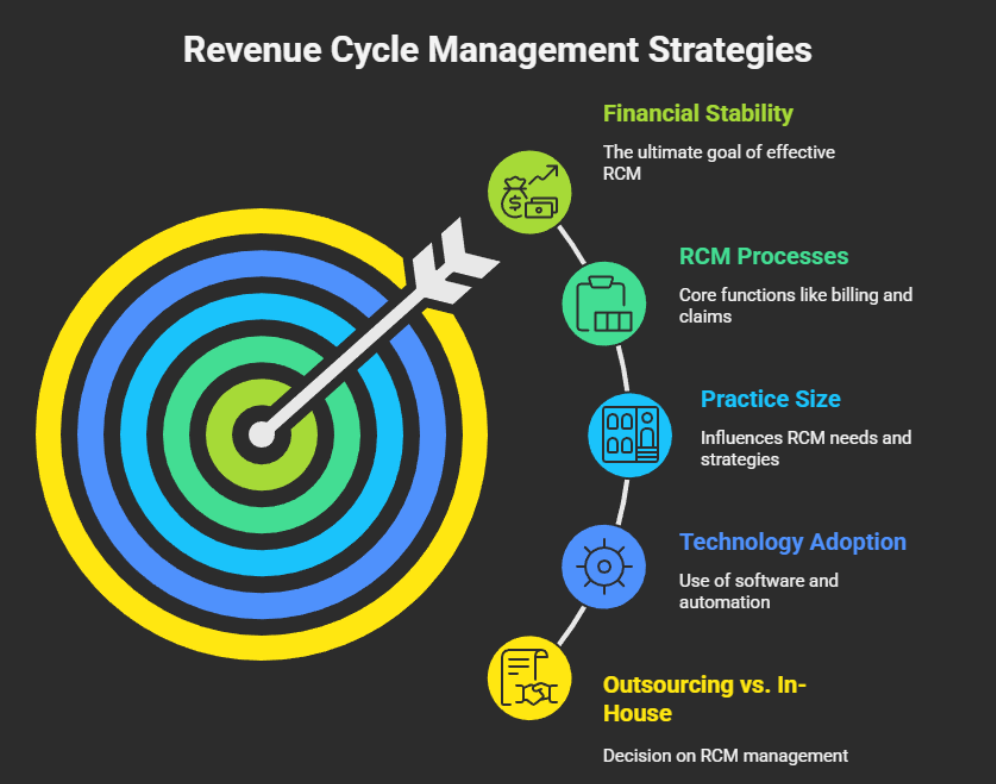
Revenue Cycle Management Differences: Small vs. Large Practices
Small Practice RCM
For small practices, the challenges revolve around limited staff, tight budgets, and the need for simplified workflows. Our experience helping small practices through Pro MD Medical Billing shows a few consistent traits:
- Personalized Patient Interaction: Small practices often have closer relationships with their patients, which can lead to more effective communication regarding billing and payments.
- Limited Staff: With fewer employees, small practices must ensure that their staff is well-trained in RCM processes to minimize errors and improve efficiency.
- Cost-Effective Solutions: Budget constraints may require small practices to seek cost-effective RCM solutions, such as outsourcing to companies like ProMD Medical Billing.
This is why small practice RCM tends to emphasize simplicity, affordability, and streamlined processes.
Large Group RCM
In contrast, large medical groups have different RCM needs due to their size and complexity. Here are some characteristics of RCM in large practices:
- Complex Billing Systems: Large groups often deal with a higher volume of patients and more complex billing systems, necessitating advanced RCM software.
- Dedicated RCM Teams: Larger practices typically have dedicated RCM teams that focus solely on managing the revenue cycle, allowing for specialization and greater efficiency.
- Scalability: Large practices require scalable RCM solutions to accommodate growth and changes in patient volume.
Large groups typically need advanced analytics, real-time dashboards, and customizable workflows that allow them to manage thousands of claims simultaneously. Their revenue cycle management differences often relate to complexity, specialization, and expansion needs.
RCM Strategy Differences by Practice Size
Technology Adoption
One of the major differences between small and large practice RCM strategies is the adoption of technology. Large practices are often early adopters of advanced RCM software due to their need for efficient handling of large volumes of data. These systems often include features like automated billing, advanced analytics, and real-time reporting, which are essential for managing complex operations.
On the other hand, small practices may prioritize cost-effective solutions that offer essential functionalities without the added complexity. Cloud-based RCM platforms are becoming popular among small practices due to their affordability and ease of use.
Outsourcing vs. In-House Management
The decision to outsource RCM functions or keep them in-house also varies between small and large practices. Small practices may find outsourcing to be a viable option since it allows them to focus on patient care while professionals handle their revenue cycle. Companies like ProMD Medical Billing specialize in providing tailored RCM services to small practices, ensuring that we maximize their revenue collection.
In contrast, large practices with the resources to maintain in-house RCM teams may prefer to do so, as it gives them more control over their processes and allows for immediate adjustments when necessary.
Compliance and Regulation
Both small and large practices must adhere to healthcare regulations, but the approach can differ. Large practices often have dedicated compliance officers or departments that ensure adherence to the latest regulations. This is crucial given the potential for significant financial penalties in case of non-compliance.
Small practices, however, may not have the same level of resources, making it essential for them to invest in RCM solutions that include compliance management features to avoid costly mistakes.
Solutions for Maximizing ROI in RCM
To achieve the highest ROI in RCM, practices of all sizes must choose solutions that align with their specific needs and challenges. Here are some strategies that can help:
For Small Practices
- Invest in Training: Ensure that all staff members are trained in the latest RCM practices and technologies to minimize errors and improve efficiency.
- Leverage Technology: Use affordable, cloud-based RCM platforms that offer essential functionalities to streamline processes and reduce costs.
- Consider Outsourcing: Partner with RCM experts like ProMD Medical Billing to handle complex billing tasks and improve revenue collection.
For Large Practices
- Implement Advanced RCM Software: Utilize comprehensive RCM solutions with features like automated billing, analytics, and reporting to handle complex billing systems efficiently.
- Focus on Compliance: Dedicate resources to compliance management to ensure adherence to regulations and avoid penalties.
- Optimize RCM Teams: Ensure that RCM teams are specialized and adequately staffed to manage the volume and complexity of the practice’s billing operations.
The Future of RCM for Medical Practices
Whether you’re running a solo practice or managing a multi-location medical group, the future of RCM is about customization. Every practice must evaluate its structure, staffing, and technological needs to determine the best approach.
At Pro MD Medical Billing, we see more providers seeking hybrid setups—outsourcing complex RCM tasks while keeping key administrative elements in-house. This balanced model addresses the ongoing revenue cycle management differences between practice sizes while maximizing efficiency.
In 2025, the gap between small practice RCM and large group RCM continues to widen due to technology, staffing, regulation, and workflow complexity. Understanding these differences helps practices choose the right tools, teams, and partners.
Whether you’re a growing medical group needing advanced automation or a small practice looking for budget-friendly support, choosing the right RCM strategy is essential for long-term financial health.
For tailored guidance and proven RCM solutions, get in touch with us today! We’re here to help you strengthen your revenue cycle, no matter your practice size.